

You finally lie down. The lights are off. And then — like clockwork — your brain hands you the to-do list, the awkward thing you said in 2017, and the fear you've been avoiding all day. Sound familiar?
If your mind goes quiet during the day and noisy at night, you're not broken. This is one of the most common reasons people in their 20s and 30s reach out for support — across Pakistan and the diaspora.
Why night-time is the brain's noisiest hour
During the day, your mind has a job — work, errands, conversations. At night, that scaffolding falls away. The unprocessed worry, grief, and what-ifs you didn't have time to feel rise up to be felt.
It isn't a flaw. It's your nervous system trying to finish a task you never gave it space to start.
The thoughts aren't the problem — your relationship to them is
Most people lie awake fighting their thoughts: 'Stop thinking about this. Why am I like this?' That fight is what keeps the brain alert. The mind reads resistance as urgency.
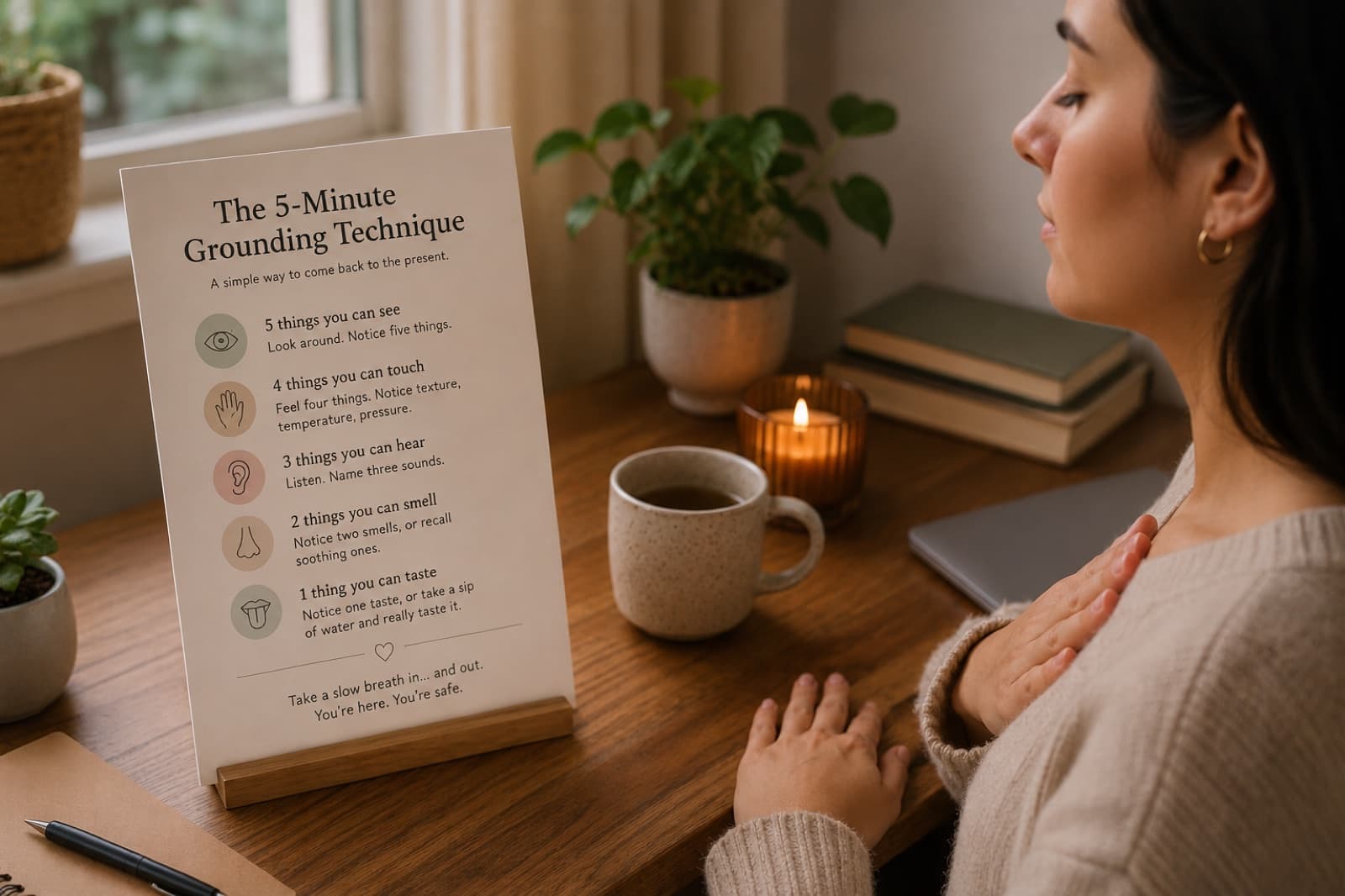
Acknowledging the thought without engaging it ('Yes, I see you, worry — I'll come back to you tomorrow') tends to settle the system faster than telling it to be quiet.
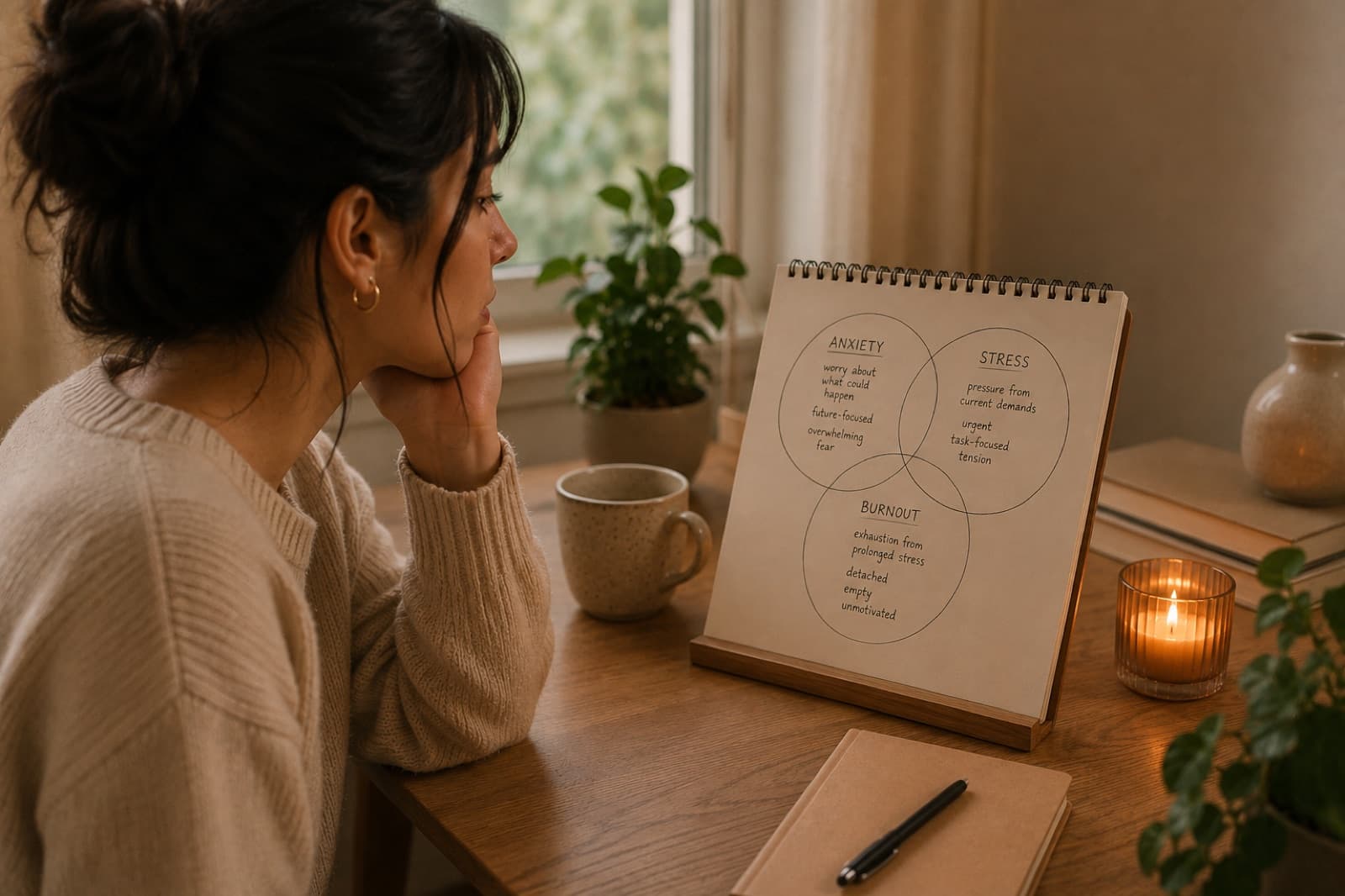
Three signs you're in an overthinking spiral (not just a busy mind)
You replay the same scenario more than three times in one sitting.
The thoughts feel sticky — you can't redirect attention even when you try.
Your body feels tense (jaw, shoulders, chest) but you can't name a specific fear.
A small thing to try tonight
Keep a notebook beside your bed. When the spiral starts, write the thought down — exactly as it sounded in your head. Then close the notebook. You're telling your brain: 'I've heard you. The page will hold this until morning.' Most people find the loop softens within a week.
When it might be worth talking to a psychologist
If overthinking has been keeping you awake more than three nights a week, or if the thoughts have shifted from worry to dread or self-criticism, a single 30-minute session can often help untangle what's underneath. A free 10-minute call is a good place to start if you're not sure.