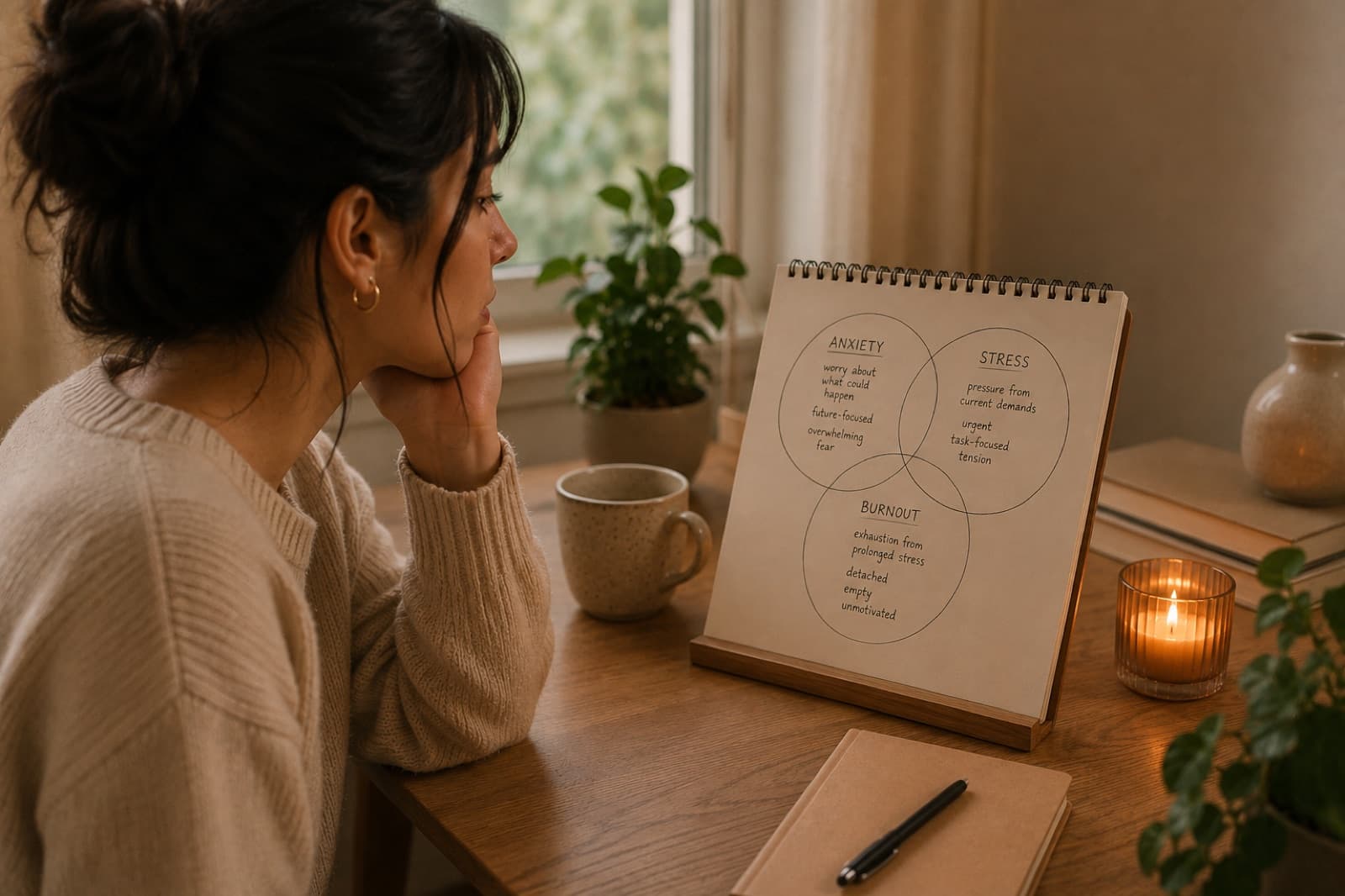

When the mind is loud and the body is tight, you don't need a complicated breathing app or 30 minutes of meditation. You need something you can do, right now, anywhere. This is that.
I teach a version of this in almost every first session. Almost everyone uses it within the same week — and most keep using it long after our work ends.
Why it works
Anxiety pulls attention into the future ('what if…') and overthinking pulls it into the past. Grounding works because your senses can only operate in the present. Bringing attention to them reroutes the brain out of the loop.
It's not a trick. It's how the nervous system actually settles.
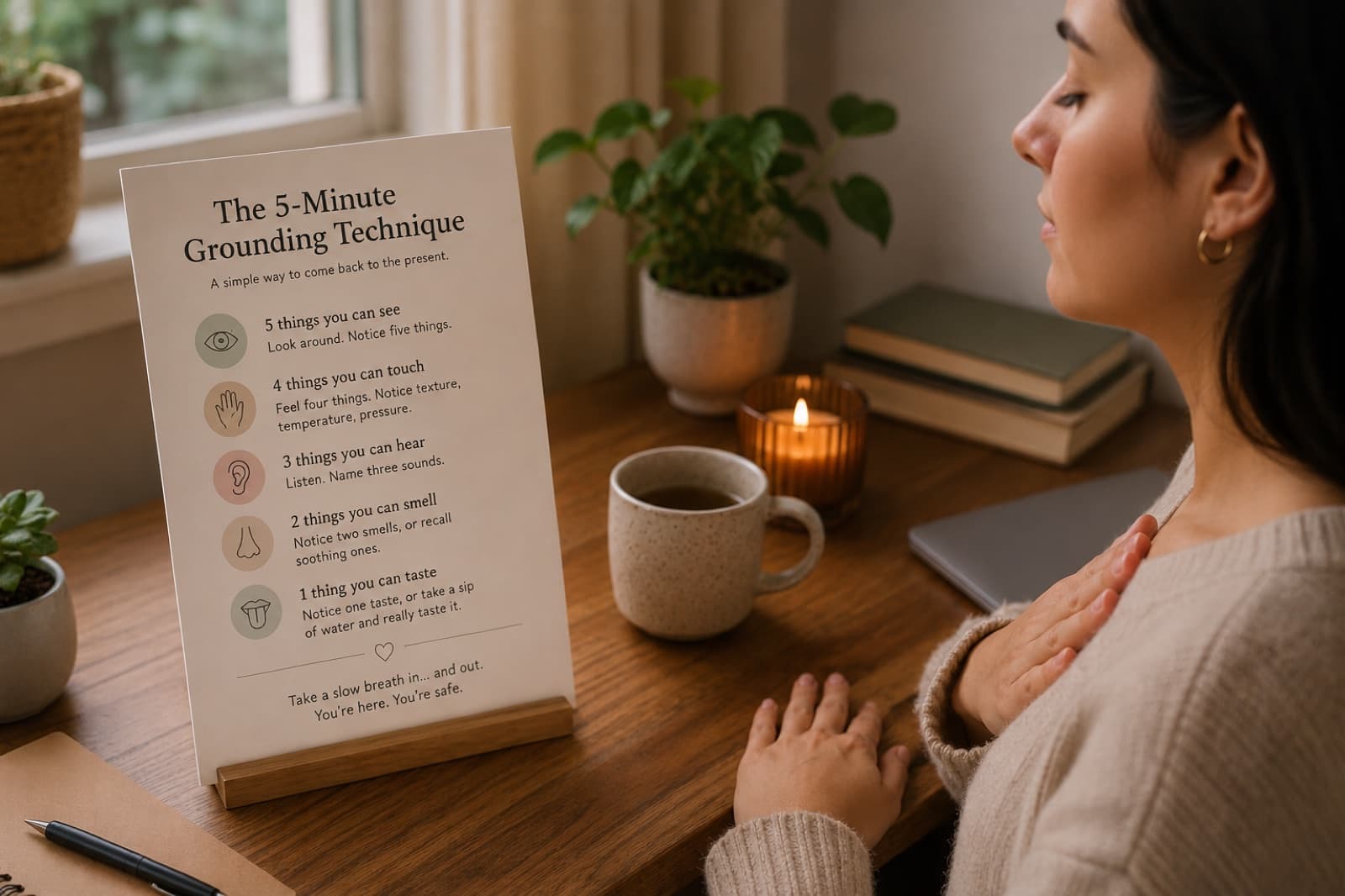
The technique — 5, 4, 3, 2, 1
Take one slow breath. Then notice, in order:
Five things you can see — colours, shapes, light. Look longer than feels natural.
Four things you can feel — fabric on skin, feet on the floor, the temperature of the air.
Three things you can hear — distant traffic, your own breath, the hum of a fridge.
Two things you can smell — even faint ones. If nothing, name two smells you love.
One thing you can taste — even just the inside of your mouth.
Take one more slow breath at the end. Most people feel a clear shift by step 3.
When to use it
Before a difficult conversation.
When you wake at night with a racing heart.
Walking from your car into the office on a heavy morning.
After scrolling for too long.
Anywhere you've drifted out of your body and into your head.
A small thing to try this week
Pick one moment a day where you'll run through the technique — even when you don't feel anxious. Practising it when you don't need it is what makes it land instantly when you do.
When it might be worth talking to a psychologist
Grounding is a tool, not a treatment. If anxiety has been daily for more than a few weeks, the tool helps you cope while we work on what's underneath in session.