
There's a version of therapy you've seen on screen — the leather couch, the stern face, the long silences. Online therapy isn't that. It's quieter, gentler, and a lot more like a real conversation than people expect.
If the unfamiliar is what's stopping you, that's the most common reason people delay. Knowing what happens in the first session usually settles most of it.
Before the session
You book online and choose a session mode — Google Meet, WhatsApp call, or a regular phone call. You'll receive a WhatsApp confirmation with the link or call time.
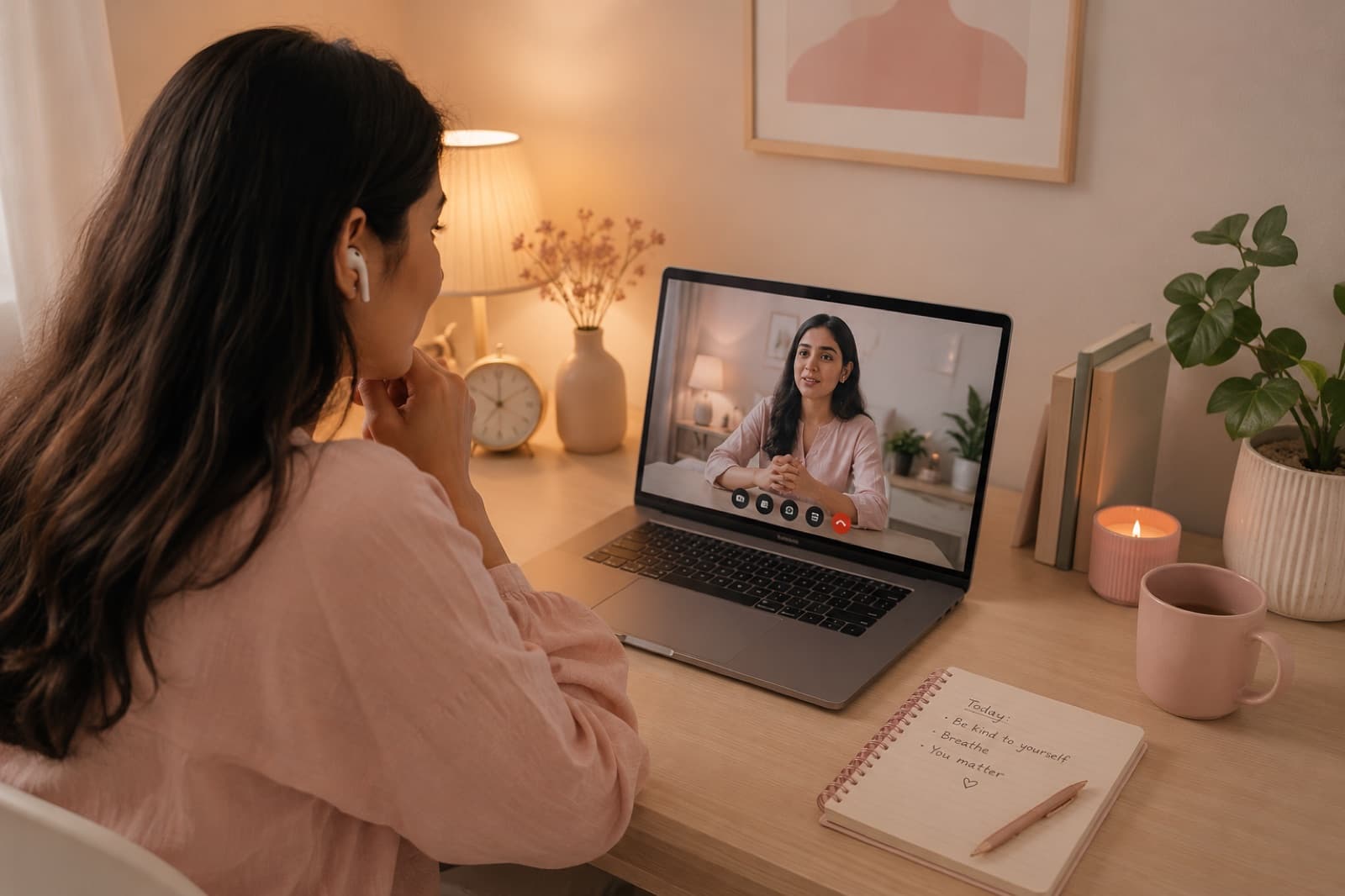
Find a quiet, private spot. Headphones help. A glass of water nearby is wise — talking is more thirsty work than people expect.
The first 30 minutes
We start gently. I ask what brought you here, in your own words — there's no clipboard of questions. You can share as much or as little as feels comfortable.
We won't try to 'solve' anything in a first session. We'll just begin to map what's going on, and decide together if and how we'd continue.
After the session
You don't have to commit to anything. Some people come once and feel they've named what they needed to name. Others book a second session a week later. There's no pressure either way.
I'll usually share one or two small things to think about between sessions, never homework with deadlines.
A small thing to try before your first session
On a piece of paper, write three sentences finishing with 'lately I've been feeling…'. Don't worry about phrasing. Bring the paper to the session — or don't. Either way, the act of writing it tends to make the first conversation noticeably easier.
When it might be worth talking to a psychologist
If you're still unsure whether to book, the free 10-minute discovery call exists for exactly this reason. You can ask questions about the process before deciding.